
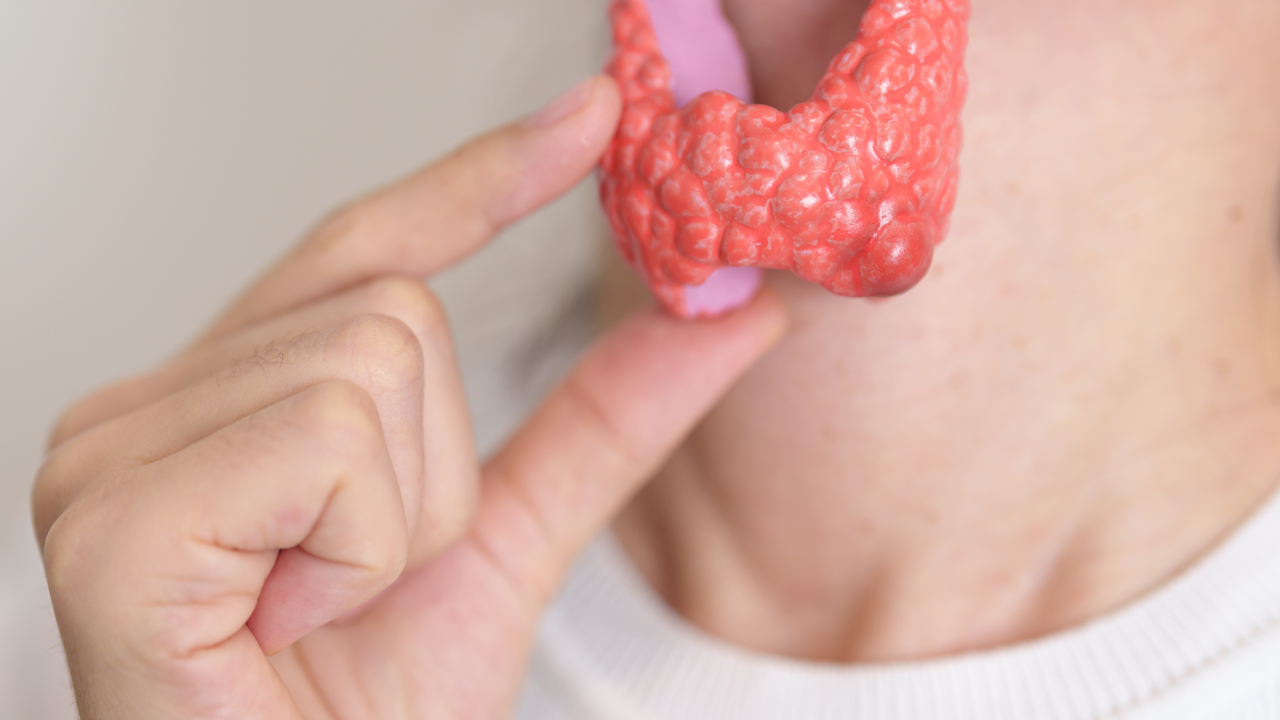
The 7 Biggest Root Causes of Hashimoto’s Thyroiditis: What Recent Research Reveals
Why Hashimoto's Is About More Than Your Thyroid
If you've been diagnosed with Hashimoto's thyroiditis, you've likely been told that your immune system is attacking your thyroid gland. While that's true, it doesn't answer the question most people are really asking: why is my immune system attacking my thyroid in the first place?
Many individuals are prescribed thyroid medication and told to monitor their labs. While medication can be an important part of treatment, it doesn't explain why autoimmunity developed or what factors may be contributing to ongoing symptoms.
As a Functional Nutritionist specializing in Hashimoto's and autoimmune disease, I view Hashimoto's through a systems biology lens. The thyroid is rarely the entire story. Research over the past several years has increasingly highlighted the roles of gut health, nutrient status, inflammation, immune regulation, stress, and environmental exposures in autoimmune thyroid disease.
Let's explore seven of the most important root causes that may contribute to Hashimoto's thyroiditis.
What Is Hashimoto's Thyroiditis?
Hashimoto's thyroiditis is the most common autoimmune disease and the leading cause of hypothyroidism in developed countries. In Hashimoto's, the immune system produces antibodies that target thyroid tissue, gradually impairing thyroid function over time.
Common symptoms include:
- Fatigue
- Brain fog
- Weight gain
- Hair loss
- Depression
- Anxiety
- Constipation
- Cold intolerance
- Dry skin
- Elevated cholesterol
Women are affected significantly more often than men, with estimates suggesting women develop Hashimoto's at rates up to ten times higher than males.
Root Cause #1: Gut Dysfunction and the Gut-Thyroid Axis
One of the most exciting areas of Hashimoto's research involves the gut-thyroid axis. Emerging evidence suggests that alterations in the gut microbiome may influence immune regulation, intestinal barrier function, inflammation, and thyroid physiology. Recent reviews continue to show significant differences in gut microbial composition among individuals with Hashimoto's compared to healthy controls.
The gut influences nutrient absorption, immune signaling, thyroid hormone metabolism, inflammation, and intestinal permeability. Researchers have found that individuals with Hashimoto's often demonstrate alterations in microbial diversity and abundance compared to healthy controls.
This doesn't mean gut dysfunction causes every case of Hashimoto's. However, it does suggest that gut health may play a meaningful role in autoimmune thyroid disease. (I explore the Hashimoto's and gut health connection in much greater depth here.)
Root Cause #2: Intestinal Permeability (\"Leaky Gut\")
One of the most discussed mechanisms linking autoimmunity and the digestive system is intestinal permeability. The intestinal lining functions as a protective barrier. When this barrier becomes compromised, bacterial fragments, toxins, and food particles may gain greater access to the immune system.
Researchers continue to investigate the relationship between intestinal barrier dysfunction and autoimmune diseases, including Hashimoto's thyroiditis. Gut barrier dysfunction, immune activation, and microbiome alterations appear closely interconnected. While intestinal permeability is not the sole cause of Hashimoto's, many functional medicine practitioners consider gut barrier integrity an important component of immune health.
Root Cause #3: Vitamin D Deficiency
Vitamin D is not simply a vitamin. It acts more like an immune-regulating hormone. Recent reviews continue to demonstrate that vitamin D deficiency is common among individuals with Hashimoto's thyroiditis and may be associated with greater autoimmune activity. Researchers have identified relationships between lower vitamin D levels and elevated thyroid antibody levels.
Interestingly, vitamin D receptors are found on many immune cells involved in autoimmune regulation. Low vitamin D status has been associated with:
- Increased inflammation
- Impaired immune tolerance
- Elevated thyroid antibodies
- Increased autoimmune risk
This topic is particularly meaningful to me because my doctoral dissertation explored the relationship between vitamin D status and inflammation in women with Hashimoto's thyroiditis. You can read more about why vitamin D matters so much in autoimmune disease, including the optimal levels I aim for in practice.
Root Cause #4: Nutrient Deficiencies
The thyroid requires an extraordinary amount of nutritional support. Several nutrients play critical roles in thyroid hormone production, conversion, antioxidant defense, and immune regulation. Research continues to highlight the importance of:
- Selenium: Involved in thyroid hormone metabolism and antioxidant protection within thyroid tissue. Recent systematic reviews suggest selenium may influence thyroid antibody levels in some individuals with Hashimoto's.
- Iron: Iron deficiency is one of the most overlooked contributors to fatigue, hair loss, and impaired thyroid function.
- Zinc: Supports thyroid hormone conversion and immune function.
- Magnesium: Participates in hundreds of enzymatic reactions involved in energy production and stress regulation.
The gut microbiome itself influences the absorption of several thyroid-related nutrients, further highlighting the connection between digestive health and thyroid physiology. The good news is that many of these nutrients can be addressed through diet — I cover the specific foods in my guide to what to eat with Hashimoto's.
Root Cause #5: Chronic Inflammation
Hashimoto's is fundamentally an inflammatory condition. The immune system produces antibodies against thyroid tissue, creating ongoing inflammatory activity. Many individuals with Hashimoto's experience fatigue, joint pain, brain fog, mood changes, and exercise intolerance.
Inflammation is not always reflected in standard thyroid testing. This is one reason why some individuals continue to experience symptoms despite achieving \"normal\" thyroid hormone levels. Reducing overall inflammatory burden is often an important goal when supporting individuals with autoimmune disease. (If your labs keep coming back \"normal\" while you still feel awful, this article explains what conventional panels often miss.)
Root Cause #6: Chronic Stress and Nervous System Dysregulation
The immune system does not operate independently of the nervous system. Research continues to demonstrate complex interactions between stress physiology, immune regulation, inflammation, and autoimmune disease. Chronic stress may influence gut permeability, blood sugar regulation, sleep quality, inflammatory signaling, and immune resilience.
Many women with Hashimoto's have spent years operating in a high-stress state before symptoms become severe enough to seek help. This does not mean stress causes Hashimoto's. However, stress can influence many systems that affect autoimmune health.
Root Cause #7: Blood Sugar Imbalances
One of the most overlooked drivers of inflammation is poor blood sugar regulation. Frequent blood sugar spikes and crashes can contribute to increased inflammation, increased oxidative stress, hormonal disruption, and energy instability.
Signs of blood sugar dysregulation include sugar cravings, afternoon fatigue, irritability when hungry, and difficulty losing weight. Improving blood sugar stability is often one of the most effective foundational interventions for improving energy and reducing inflammatory burden.
What About Gluten?
Gluten remains one of the most debated topics in Hashimoto's care. Current evidence does not support a universal gluten-free recommendation for every person with Hashimoto's who does not have celiac disease. However, removing gluten has shown a positive impact for the majority of patients with Hashimoto's.
Recent reviews suggest the evidence remains mixed, and additional research is needed. Some individuals report symptom improvement, while broader conclusions remain limited by study quality and inconsistency. This is why personalized nutrition matters. What works for one person may not work for another.
A Functional Nutrition Perspective on Hashimoto's
Hashimoto's is rarely caused by a single factor. Instead, it is often the result of multiple systems becoming dysregulated over time. When working with clients, I evaluate factors such as gut health, nutrient status, blood sugar regulation, stress physiology, inflammation, lifestyle habits, and thyroid function.
The goal is not simply to chase symptoms. The goal is to understand why those symptoms developed in the first place. If you'd like a structured, root-cause approach to your thyroid health, learn more about working with a Hashimoto's nutritionist in NYC. Or, to see which root cause is most likely driving your symptoms, my free Root Cause Assessment takes about two minutes and points you in the right direction.
Supplements
Shop my professional-grade supplement dispensary
Find the selenium, vitamin D, iron, zinc, and magnesium formulas I trust in my practice — all practitioner-grade and shipped to your door — through my Fullscript dispensary.
Create your free Fullscript account →Ready to get to the root cause of your Hashimoto's symptoms?
If you're struggling with fatigue, brain fog, weight gain, or persistent thyroid issues despite treatment, there may be more to the story than your TSH level. I offer complimentary discovery calls to explore a personalized approach.
Book a complimentary discovery call →Dr. Sarah Khan, PhD, MBA
Integrative and Functional Nutritionist in NYC specializing in gut health, the gut-brain axis, autoimmune disease, and hormonal & metabolic health.