
Hashimoto's Hair Loss: 5 Root Causes & How to Stop It
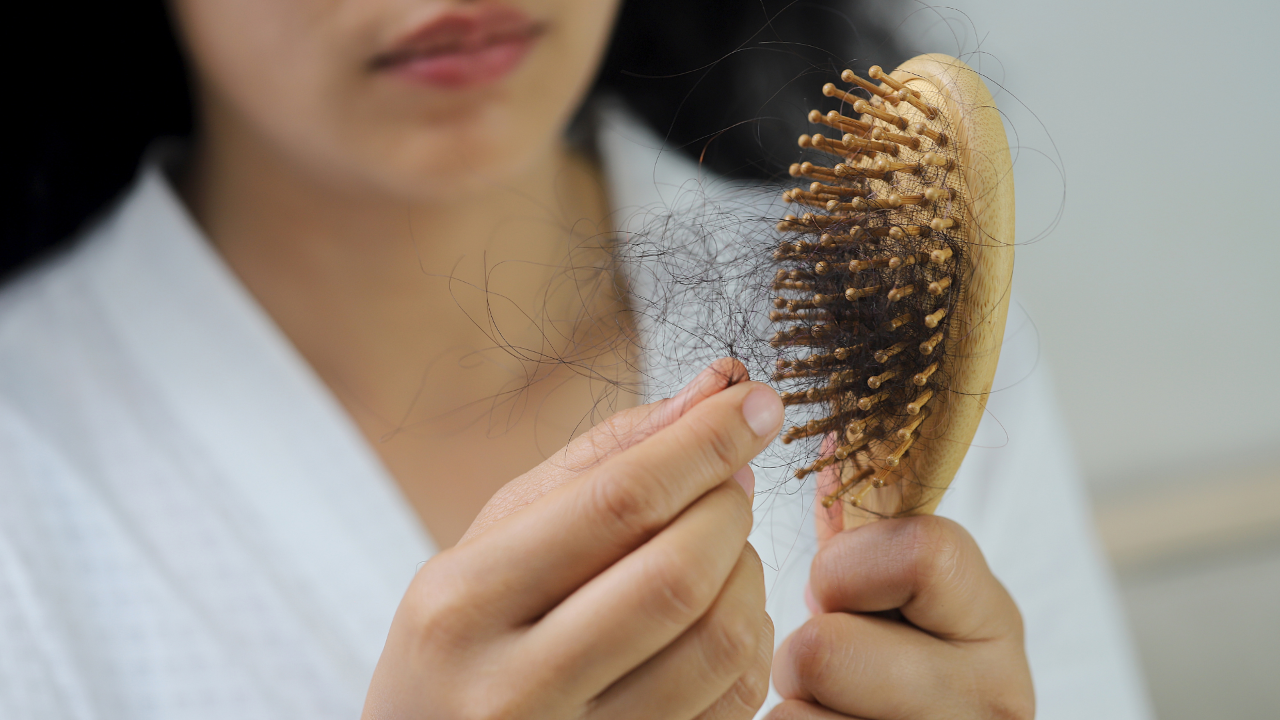
If you have Hashimoto's and you're finding hair in the shower drain, on your pillow, wrapped around your hairbrush, you already know how unsettling it is. It's not just the hair itself. It's watching your ponytail get thinner, noticing your part widen, seeing the ends of your eyebrows fade, and feeling a quiet panic that nobody around you seems to take seriously. A lot of women get told their thyroid labs are "normal" and that the shedding will settle down on its own. And then it just keeps happening.
So let me say this part first: Hashimoto's hair loss is real, it's incredibly common, and in most cases it does come back. By many estimates, a large share of people with Hashimoto's deal with hair loss at some point, so if this is you, you're in very good company. But getting it to stop means understanding why it's happening in the first place, because with Hashimoto's the cause is almost never just one thing. It's usually thyroid hormone, nutrient status, the autoimmune process itself, and stress all tangled together. Let's go through what's actually happening, and what genuinely makes a difference.
Why Hashimoto's Causes Hair Loss in the First Place
Your hair follicles are some of the most metabolically demanding tissue in your body, and they're very sensitive to thyroid hormone. T3 and T4 directly drive the hair growth cycle, mostly by keeping follicles in their active growth phase (called anagen). When thyroid hormone drops, which is what eventually happens in Hashimoto's, follicles get pushed out of that growth phase too early and into the resting and shedding phase. What you see is diffuse thinning across the whole scalp, and often the outer third of the eyebrows thinning too.
That's why hair loss is one of the most common and most upsetting symptoms my clients bring up. But thyroid hormone is only the first layer. To actually stop the shedding, you have to look at the other things Hashimoto's tends to drag along with it.
The 5 Root Causes of Hashimoto's Hair Loss
1. Low or Unstable Thyroid Hormone
This is the most common driver and, in theory, the most straightforward. When thyroid hormone falls, follicles shift into the resting phase and shed. This diffuse, all-over shedding has a name, telogen effluvium, and it's the classic Hashimoto's pattern.
The part most people miss is that there's a sweet spot for thyroid hormone when it comes to your hair. You need enough to keep follicles growing, which means the levels and the medication dose have to be dialed in properly. That's exactly why some women keep shedding even after starting thyroid medication. A TSH sitting at the very top of the lab's "normal" range might be technically acceptable and still leave your follicles under-supported. It's a big reason so many women feel unwell, and keep losing hair, while being told their labs look fine.
2. Iron Deficiency (Even Without Anemia)
This is the single most overlooked cause of hair loss in women with Hashimoto's, and it's often the missing piece when hair keeps falling out even though the thyroid medication is dialed in. Iron is essential for hair follicle function, and when your stores run low, your follicles are the first thing your body deprioritizes, because it's sending iron to more survival-critical places first.
Here's the detail that trips everyone up: you can have low iron stores while your standard hemoglobin looks completely normal. The marker that actually matters for hair is ferritin, which reflects your stored iron, and it can be low long before you'd ever be called anemic. A lot of women with Hashimoto's run low on iron from heavy periods, from low stomach acid (which is common with hypothyroidism and makes iron harder to absorb), or from years of eating too little. If nobody has checked your ferritin, it's one of the most important numbers for you to know.
3. Nutrient Deficiencies: Zinc, Selenium, B12, and Vitamin D
Beyond iron, a handful of nutrients show up again and again in both thyroid function and hair growth. Deficiencies are common in Hashimoto's because the same gut and absorption issues that come with the condition make it harder to take these nutrients in.
Zinc and selenium are both needed to convert inactive T4 into active T3, and both support the hair follicle directly. Vitamin B12 deficiency runs higher in autoimmune conditions and feeds into shedding and fatigue. And vitamin D acts much more like an immune-regulating hormone than a regular vitamin, with low levels strongly tied to Hashimoto's. This one is close to my own work. My doctoral dissertation looked at vitamin D status and inflammation in women with Hashimoto's, and the women with higher vitamin D consistently had lower inflammatory markers.
4. The Autoimmune Process Itself
Here's something the standard explanation usually skips: Hashimoto's is an autoimmune condition first, a thyroid condition second. That matters for your hair in two ways.
First, the ongoing immune activity and inflammation behind Hashimoto's can affect follicles on their own, separate from your actual hormone levels. That's part of why some women shed even when their thyroid numbers look reasonable. Second, having one autoimmune condition makes you more likely to develop another. One worth knowing about is alopecia areata, a separate autoimmune condition that causes distinct, round bald patches rather than the all-over thinning of thyroid-driven shedding. If you're noticing defined patches rather than general thinning, mention that to your doctor specifically, because it's a different mechanism and worth flagging.
5. Chronic Stress and Blood Sugar Swings
Stress isn't a soft, secondary factor here. A big physical or emotional stressor (a major life event, an illness, surgery, crash dieting) can set off telogen effluvium all on its own, the very same diffuse shedding that low thyroid causes. Stack stress-driven shedding on top of Hashimoto's and the effect piles up.
Blood sugar feeds right into this. Frequent spikes and crashes push cortisol and inflammation up, and both work against steady hair growth and against your thyroid in general. This is why I almost never treat hair loss as its own isolated problem. It sits at the intersection of thyroid, nutrients, immune activity, and stress, and the results that actually last come from supporting all of those together.
Why Your Hair Keeps Falling Even On Thyroid Medication
This might be the most common frustration I hear: "My doctor adjusted my medication, my TSH is normal, and I'm still losing hair." If that's you, it almost always means one of the non-thyroid drivers hasn't been dealt with yet.
Usually it's low ferritin that nobody tested, a thyroid dose that's fine on paper but not optimized for how you actually feel, nutrient gaps that were never looked at, or ongoing inflammation from the autoimmune process and blood sugar swings. Thyroid medication replaces the hormone. It doesn't refill depleted iron stores, calm immune activity, or steady the stress physiology underneath. Those have to be worked on directly, which is exactly why a thyroid-only approach so often leaves the hair loss unsolved.
The Labs Worth Requesting
If you're losing hair with Hashimoto's, this is the panel I'd want to see. Most of it can be requested at a regular physical even if it isn't ordered by default, though you'll often have to ask for it specifically:
- Full thyroid panel: TSH, Free T3, Free T4, Reverse T3, plus TPO and thyroglobulin antibodies. Not TSH on its own.
- Ferritin: the stored-iron marker that matters most for hair. The optimal level for regrowth generally sits well above the bottom of the lab range.
- Full iron panel: serum iron, TIBC, and transferrin saturation alongside ferritin.
- Vitamin D (25-OH): for immune regulation and follicle support.
- B12 and folate: especially given the higher deficiency risk with autoimmune conditions.
- Zinc: involved in both T4-to-T3 conversion and follicle health.
Seeing these together, instead of one at a time, is usually what reveals the real driver. A normal TSH next to a low ferritin tells a completely different story than the TSH ever would on its own.
What Actually Helps Hashimoto's Hair Loss
Here's the genuinely good news: thyroid-related hair loss is usually reversible once you address the drivers underneath it. It takes some patience, because the hair growth cycle is slow and meaningful regrowth usually takes a few months, but it does come back. This is where the real leverage is:
Optimize thyroid hormone, don't just "normalize" it. Work with your prescriber to get your thyroid markers into a genuinely optimal range and your symptoms actually improved, not just squeaked inside the lab cutoffs.
Correct iron and ferritin carefully. If ferritin is low, this is often the single highest-impact change you can make. But iron should be corrected thoughtfully and rechecked, not thrown at the problem, since too much is its own issue and iron can interfere with how you time your thyroid medication.
Close the nutrient gaps. Get enough protein at every meal (your hair is largely protein), and make sure your zinc, selenium, B12, and vitamin D are covered through food first and targeted supplements where testing shows you need them. Brazil nuts, eggs, fatty fish, shellfish, leafy greens, and quality protein all pull their weight here.
Calm the autoimmune and inflammatory load. This is where gut health, blood sugar stability, and stress come in. The same foundations that quiet Hashimoto's overall tend to help your hair too.
Be gentle with fragile hair while it recovers. Hypothyroid hair is drier and more brittle, so going easier on heat styling, tight styles, and harsh treatments helps you avoid breakage on top of the shedding while regrowth catches up.
The Bottom Line
Hashimoto's hair loss is one of the hardest symptoms of this condition emotionally, and one of the most brushed off. But it isn't random, and for most women it isn't permanent. It's a signal that something underneath needs support: thyroid hormone, nutrient status, immune activity, or stress, and often several of those at once. When you find those root drivers and work on them together instead of one in isolation, the shedding slows and the hair grows back.
If you've been losing hair despite "normal" labs, or even while on thyroid medication, it's worth looking deeper than TSH. If you want to figure out which root cause is most likely driving your symptoms, my free Root Cause Assessment takes about two minutes and points you toward the best place to start. You can also dig into the bigger picture in the 7 biggest root causes of Hashimoto's, what to eat with Hashimoto's, and why your labs can be "normal" while you still feel awful.
This article is for educational purposes and isn't medical advice. Hair loss can have many causes, so please work with your physician on diagnosis, lab interpretation, and any changes to medication or supplements.
Supplements
Shop my professional-grade supplement dispensary
Find the practitioner-grade iron, vitamin D, zinc, selenium, and B12 formulas I trust for thyroid and hair support — shipped directly to your door — through my Fullscript dispensary.
Create your free Fullscript account →Ready to get to the root cause?
If you're losing hair despite "normal" labs or even on thyroid medication, there may be more to the story than TSH alone. I help women identify the underlying drivers through a personalized functional nutrition approach, whether you're here in NYC or anywhere in the country.
Book a complimentary discovery call →Dr. Sarah Khan, PhD, MBA
Integrative and Functional Nutritionist in NYC specializing in gut health, the gut-brain axis, autoimmune disease, and hormonal & metabolic health.