
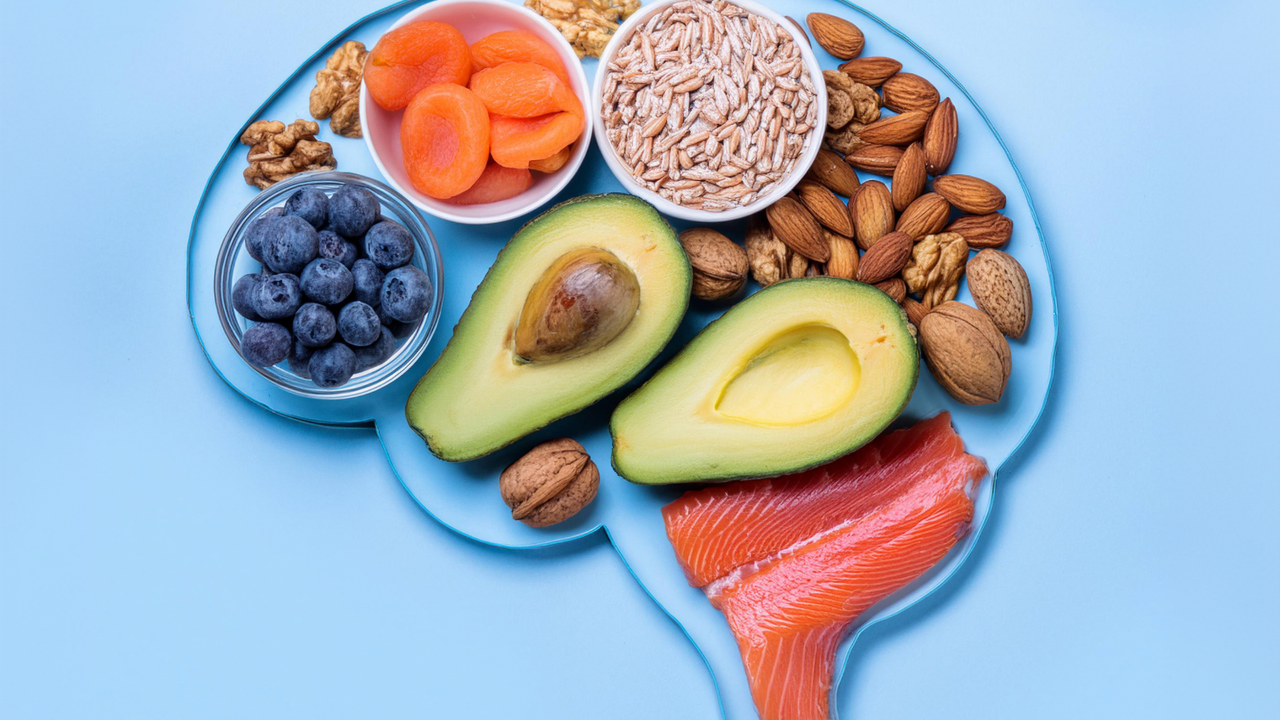
Nutrition Strategies for Brain Fog and Long-Term Brain Health
The clients who come to me with brain fog almost never describe it as a health problem at first. They describe it as a performance problem. They are rereading the same paragraph three times. They are losing the word they wanted mid-sentence on a call. They get through the day and have nothing left for anything that matters to them.
They have usually been told it is stress, or sleep, or just what happens in your forties. Sometimes it is. But nutrition for brain health is one of the few levers you can pull every single day, and when we actually look at what is going on, there is often something specific underneath the fog.
Blood sugar swinging all day. A gut that has been inflamed for years. A vitamin D level in the basement. A ferritin of 12 that nobody flagged because hemoglobin looked fine.
Here is what I want you to take from this article: the metabolic, inflammatory, and nutritional conditions that shape how your brain performs at 70 are being set right now. This is not meant to scare you. It is meant to inspire and bring hope!
Below are the six strategies I work through with clients, ordered from foundational to specific.
Key takeaways
- Brain fog is a symptom, not a diagnosis. The common nutritional drivers are blood sugar instability, gut inflammation, and correctable nutrient deficiencies.
- Ultra-processed food is the highest-impact thing to change. In a 2026 Harvard analysis, the highest consumers had a 58% higher dementia risk; the highest whole-food eaters had a 41% lower risk.
- Your brain runs on glucose and tolerates swings poorly. Build every meal from protein, fat, fiber, and complex carbohydrate.
- Roughly 80% of vagus nerve fibers run gut to brain, not brain to gut. Gut inflammation is a brain issue.
- Four labs are worth checking for brain fog: vitamin D, B12 (with homocysteine), folate, and ferritin.
- Walking 10 to 20 minutes after meals lowers the glucose spike more than the same walk taken beforehand.
What Causes Brain Fog? Start Upstream
Conventional care tends to ask whether symptoms have crossed a diagnostic threshold. The question I ask first is different: what is driving this, and which of those drivers can we change?
That is the functional medicine model, and it is not a rejection of neurology. It works alongside it. The Institute for Functional Medicine describes the approach as treating modifiable lifestyle factors, nutrition chief among them, as central to identifying the underlying contributors to a clinical picture rather than as an afterthought. Applied to the brain, that means looking at metabolic health, gut function, immune activation, nutrient status, sleep, and stress physiology as one connected system.
The brain is among the most metabolically demanding organs you have. Blood sugar dysregulation, chronic inflammation, nutrient deficiencies, and poor sleep can disrupt cognition years or even decades before anything shows up on a test. Mitochondrial function belongs on that list too, since mitochondria produce most of the energy your cells run on, age-related brain conditions have been linked to mitochondrial dysfunction, and both nutrition and exercise change how mitochondria behave.
There is now strong trial evidence that this multidomain approach works. I will come back to that.
1. Whole, Minimally Processed Foods: The Highest-Impact Change
If you change one thing, change this. It is basic and boring and it outperforms almost everything else.
The evidence on ultra-processed foods and cognition has gotten hard to argue with. In a 2026 Harvard analysis of 5,370 older adults followed for nearly nine years, participants eating the most ultra-processed food had a 58% higher risk of developing dementia than those eating the least, plus a 46% higher risk of cognitive impairment short of dementia. The same study found the reverse in the other direction: those eating the most whole, minimally processed food had a 41% lower dementia risk.
That sits inside a consistent body of work. A study of 10,775 Brazilian adults in JAMA Neurology linked higher ultra-processed intake to faster decline in global cognition and executive function over about eight years. A UK Biobank cohort of more than 72,000 adults aged 55 and older found higher intake associated with increased risk of all-cause dementia, vascular dementia, and Alzheimer's disease across a decade. Framingham Heart Study analyses found the association held even after adjusting for total calories and overall diet quality, which suggests the processing itself carries risk rather than just tracking with an otherwise poor diet.
Why would processing matter on its own? These products tend to be high in refined sugars, refined oils, and sodium while being low in fiber, vitamins, minerals, and bioactive plant compounds. High ultra-processed intake has also been linked to gut dysbiosis and increased intestinal permeability, and intestinal inflammation does not stay in the intestine. It can extend to neuroinflammation, which is the thread connecting this section to strategy five.
What this looks like on a plate: food that is recognizable as having come from a plant or an animal. Vegetables, fruit, legumes, whole grains, nuts, seeds, fish, eggs, poultry, olive oil. I put specific emphasis on vegetables and fruit with clients because they are the delivery vehicle for the vitamins, minerals, fiber, and phytonutrients everything below depends on. Volume and variety, not perfection.
Does the research actually hold up?
When the MIND diet was tested head-to-head in a three-year randomized trial published in the New England Journal of Medicine in 2023, both the MIND group and the comparison group improved cognitively, and the difference between them was not statistically significant. That got a lot of headlines.
What got less attention is what came next. In July 2025, the Alzheimer's Association's US POINTER trial published in JAMA: 2,111 older adults at elevated risk, two years, five US sites, randomized to a structured or self-guided multidomain program combining physical activity, dietary change, cognitive and social challenge, and health monitoring. Both groups improved on global cognition. The structured group improved significantly more. Benefits held across age, sex, ethnicity, cardiovascular health status, and APOE e4 genotype. It was designed to test whether the earlier Finnish FINGER results would generalize to a diverse American population, and it did.
The honest synthesis: a single dietary pattern tested against an already-improving control group has given mixed results. Diet embedded in a multidomain lifestyle program has come out positive in the two largest trials ever run. That distinction is the entire argument for working on several systems at once instead of chasing one intervention, which is what I do with clients.
2. How Blood Sugar Affects Your Brain (and How to Stabilize It)
Your brain runs on glucose and it has very little tolerance for interruption. This is why I treat blood sugar as a brain issue and not just a diabetes-prevention issue.
The brain maintains its own semi-autonomous glucose microsystem, evolved specifically to protect neurons from short dips in fuel availability. Peripheral cells tolerate a fair amount of variability. Brain cells are considerably more vulnerable to even brief nutrient deprivation. When that system is chronically perturbed, you can end up with brain glucotoxicity and brain insulin resistance, which interferes with the insulin signaling pathways that support cognition.
Two findings I come back to constantly:
Insulin resistance changes how the brain uses fuel before any diagnosis exists. A systematic review of FDG-PET imaging studies found that 22 of 23 studies linked hyperglycemia or insulin resistance to reduced cerebral glucose metabolism, in largely the same regions implicated in Alzheimer's disease: frontal cortex, parietotemporal cortex, posterior cingulate, and precuneus. The authors noted this can appear in people who are cognitively normal.
The swings matter, not just the average. Oscillating glucose appears more damaging to endothelial function and generates more oxidative stress than a stable elevated average. Visit-to-visit glucose variability has been associated with brain atrophy and white matter changes independent of mean glucose. In plain terms: a day of spikes and crashes is not the same as a steady day with the same average, even though your annual labs might not distinguish them.
How to structure meals for stable blood sugar
Four components, every meal:
- Protein. Roughly 25 to 35 grams for most adults. Slows gastric emptying, blunts the glucose response, supplies the amino acids that build your neurotransmitters.
- Fat. Olive oil, avocado, nuts, seeds, fatty fish. Slows absorption further, supports satiety and hormone production.
- Fiber. Vegetables, legumes, whole intact grains, berries. Slows glucose absorption and feeds the gut microbes in strategy five.
- Complex carbohydrate. Not removed. Chosen and anchored. Sweet potato, quinoa, beans, oats, whole fruit.
What surprises people is how much the additions do compared to the subtractions. A bowl of oatmeal by itself and the same oatmeal with Greek yogurt, ground flax, walnuts, and berries produce very different glucose curves. Nothing was taken away.
Two things I ask about early with almost every client: what the first meal of the day looks like (a carbohydrate-only breakfast sets up the whole day), and how long the gaps between meals are. Going six or seven hours without eating and then arriving at dinner ravenous nearly guarantees a large excursion. For the founders and executives I work with, that gap is usually the real problem, not the food quality.
There is a useful point from nutritional psychiatry here as well. Dr. Uma Naidoo, who directs the nutritional, lifestyle, and metabolic psychiatry service at Massachusetts General Hospital, emphasizes building meals around lower-glycemic vegetables like cauliflower, cabbage, green beans, lettuce, and spinach, with daily berries and generous herbs and spices. She also says something I tell clients constantly: start with one or two changes, not all of them. The people who overhaul everything on a Monday have abandoned it by Thursday.
Not sure which system is driving your brain fog? The Root Cause Quick Scan is a 12-question assessment covering eight body systems. It shows you where your pattern points, in about three minutes. Take the Root Cause Quick Scan
3. Phytonutrients for Brain Health: Eat a Wide Range Every Day
Phytonutrients are the compounds plants make to protect themselves: polyphenols, flavonoids, anthocyanins, carotenoids, and thousands more. Many act as antioxidants in human tissue, and some work by switching on your body's own antioxidant and anti-inflammatory pathways rather than neutralizing free radicals directly.
Your brain is unusually vulnerable to oxidative stress. It consumes a disproportionate share of your oxygen, it is rich in easily oxidized fats, and it has comparatively limited antioxidant defenses. Accumulated oxidative damage alongside declining defenses is considered an initiating factor in both normal and pathological brain aging. That makes what you eat mechanistically relevant, not just aspirational.
The research is reasonably consistent:
- In a French cohort, people in the highest quintile of a polyphenol dietary pattern (nuts, citrus, berries, leafy vegetables, soy, cereals, olive oil, tea) had a 50% lower risk of dementia than those in the lowest.
- Across the Nurses' Health Study and Health Professionals Follow-Up Study, nearly 78,000 adults, higher long-term flavonoid intake was associated with lower odds of subjective cognitive decline.
- In an earlier Nurses' Health Study analysis, higher blueberry and strawberry intake was associated with slower cognitive decline, which the authors estimated as delaying cognitive aging by up to roughly 2.5 years.
- In the Framingham Offspring cohort, greater cumulative flavonoid-rich fruit intake during midlife, though not late life, was associated with a 44% lower risk of all-cause dementia. Worth sitting with if you are in your thirties or forties reading this.
The two foods with the strongest individual evidence
Leafy greens. In the Rush Memory and Aging Project, 960 older adults followed for about five years, those eating the most green leafy vegetables (a median of roughly 1.3 servings daily) declined more slowly on memory and thinking tests than those eating almost none. The researchers described the gap as roughly equivalent to being 11 years younger cognitively. One serving is half a cup cooked or one cup raw. Small ask for that kind of association.
Extra virgin olive oil. A 2024 JAMA Network Open analysis of 92,383 US adults followed for 28 years found that consuming at least 7 grams daily, a bit over half a tablespoon, was associated with a 28% lower risk of dementia-related death compared with never or rarely consuming it. Swapping about a teaspoon of margarine or mayonnaise for olive oil was associated with an 8% to 14% lower risk. For accuracy: the association was stronger and statistically significant in women, and did not stay significant in men after full adjustment.
The best foods for brain fog and oxidative stress: my daily shortlist
- Berries. Blueberries, strawberries, blackberries, raspberries. Frozen counts, is cheaper, and is just as nutrient dense.
- Extra virgin olive oil. Use it generously, including uncooked over finished dishes, where the polyphenols survive best.
- Olives.
- Cherries, especially tart cherries.
- Teas. Green and black both contribute meaningfully to total polyphenol intake.
- Herbs and spices. Turmeric, ginger, cinnamon, rosemary, oregano, thyme, cloves. Gram for gram among the most polyphenol-dense foods available, and the single easiest thing on this list to increase today.
- Dark leafy greens, daily.
The organizing principle is diversity, not dose. Different phytonutrient families act on different pathways and none substitutes for the rest. The target I use is 30 different plant foods per week, which comes from the American Gut Project. It analyzed stool samples from over 10,000 participants across three countries and found that people eating more than 30 plant types weekly had more diverse gut microbiomes than those eating 10 or fewer. Plant diversity predicted microbiome diversity better than labels like vegan or omnivore did.
Herbs, spices, nuts, seeds, whole grains, coffee, and dark chocolate all count, which makes 30 far more achievable than it sounds. One spice-heavy stew can contribute eight.
4. Movement and Blood Sugar: Why Walking After Meals Matters
Movement belongs in a nutrition article for one reason: it is among the most powerful tools you have for blood sugar regulation, and it works on a timescale food alone does not.
Skeletal muscle takes up glucose during and after contraction through a pathway that does not require insulin. Walking recruits those muscles at exactly the moment glucose is entering your bloodstream, giving that incoming fuel somewhere to go.
Timing matters more than intensity. A systematic review with meta-analysis found that exercise performed soon after eating reduced post-meal glucose excursions more than the same exercise before eating, and more than staying still, with longer delays weakening the effect. In controlled trials, 30 minutes of brisk walking after a meal substantially reduced the glucose peak across meals of differing carbohydrate content and macronutrient composition. Even slow post-meal walking reduces the glucose response to a carbohydrate-rich meal.
What I actually ask clients to do:
- Walk 10 to 20 minutes after your largest meals, starting within about 30 minutes of finishing.
- Break up sitting. Two or three minutes of movement every half hour, a set of squats, calf raises, a lap around the floor. These count. They are not a consolation prize for missing a workout.
- Keep resistance training in the mix. More muscle means more capacity to dispose of glucose, and it supports the mitochondrial function I mentioned at the top.
If you have a desk job, this strategy and strategy two are the same strategy from two directions. Worth noting that physical activity was a core component of the structured arm in US POINTER, the group with the largest cognitive gains.
5. The Gut-Brain Connection: Why Gut Health Drives Brain Fog
The gut and brain are in constant two-way communication through neural, endocrine, and immune pathways, collectively the microbiota-gut-brain axis. What surprises most people is how lopsided the traffic is.
The main neural route is the vagus nerve, and roughly 80% of its fibers are afferent, carrying information from the periphery up to the central nervous system. Only about 20% run the other way. Anatomically, the gut is doing far more of the talking. Vagal afferents relay information about gut pH, nutrient status, microbial metabolites, and inflammatory state directly to brainstem circuits involved in mood and stress regulation. Because these fibers do not cross the intestinal lining, they sense the microbiome indirectly, largely through enteroendocrine cells that release signaling peptides based on what is happening in the gut.
The return channel matters clinically. Vagal efferent fibers drive the cholinergic anti-inflammatory pathway, which dampens peripheral inflammation and reinforces intestinal barrier integrity by strengthening tight junctions. This is one mechanism by which chronic stress, which suppresses vagal tone, contributes to increased intestinal permeability and inflammation. If you have ever wondered why a stressful quarter shows up in your digestion, that is part of the answer.
How gut bacteria change brain inflammation
When gut bacteria ferment fiber and resistant starch, they produce short-chain fatty acids, mainly acetate, propionate, and butyrate. These do far more than feed colon cells:
- They help maintain blood-brain barrier integrity by supporting the junctional proteins that control permeability.
- They can cross the blood-brain barrier and directly modulate microglia, your brain's resident immune cells, influencing their activation state, cytokine output, and metabolic behavior.
- They reduce circulating pro-inflammatory cytokines, lowering the inflammatory signal reaching the brain in the first place.
That is the concrete link between working on your gut and reducing neuroinflammation. It is fiber, fermentation, metabolites, barrier integrity, and microglial behavior. Not a metaphor.
What supports it:
- Fiber diversity. Different microbes ferment different substrates. Legumes, oats, barley, cooked-and-cooled potatoes and rice for resistant starch, vegetables, nuts, seeds, fruit.
- Fermented foods. In a Stanford randomized trial, 36 adults followed either a fermented-food or high-fiber diet for 10 weeks. The fermented-food group showed increased microbial diversity and decreased levels of 19 inflammatory proteins including IL-6, plus reduced activation in four immune cell types. The high-fiber group did not show those changes in that window, which the researchers attributed partly to the microbiome needing longer to adapt. Both belong in your diet. Fermented foods may just act faster. Yogurt, kefir, kimchi, sauerkraut, miso, traditionally fermented vegetables.
- Fixing what is actually wrong first. This is the part I feel strongest about, because it is where generic advice does real damage. If you have significant bloating, altered bowel habits, or reflux, or something like SIBO or IMO, adding fiber and fermented foods can make you worse rather than better. I see this constantly. Someone reads an article like this one, doubles their fiber, feels awful, and concludes their body is broken. It is not. The order of operations was wrong. The underlying dysfunction gets addressed first, and diversity gets built afterward.
6. What Labs to Check for Brain Fog: 4 Deficiencies Worth Ruling Out
Brain fog, low mood, poor concentration, and fatigue get attributed to stress or aging constantly, when the actual driver is something correctable. A result inside the standard reference range is also not automatically an optimal result for you, and the deficiencies most relevant to cognition are the ones most commonly waved past.
These four are worth knowing your numbers on.
|
Nutrient |
Why it matters for the brain |
Markers worth running |
|
Vitamin D |
Receptors are widely distributed in brain tissue; low status is consistently associated with worse cognitive outcomes |
25-hydroxyvitamin D |
|
Vitamin B12 |
Required for myelin maintenance, red blood cell formation, and homocysteine clearance |
Serum B12, plus methylmalonic acid and homocysteine if B12 is borderline |
|
Folate |
Works alongside B12 in one-carbon metabolism and homocysteine remethylation |
Serum or red blood cell folate, homocysteine |
|
Iron |
Required for oxygen transport, myelination, and dopamine synthesis |
Ferritin, transferrin saturation, complete blood count |
Vitamin D
In a UK Biobank cohort of 269,229 adults aged 55 to 69 followed for 14 years, vitamin D deficiency (below 30 nmol/L in that study) was associated with a 19% to 25% increased risk of all-cause dementia, Alzheimer's disease, and vascular dementia. A separate UK Biobank analysis of more than 443,000 participants found lower 25-hydroxyvitamin D associated with increased risk of dementia, mild cognitive impairment, and delirium, with risk rising sharply at the low end. Mendelian randomization work suggests a plausibly causal relationship at severe deficiency. Supplementation trial data is thinner than the observational data, which is exactly why I test and correct real deficiency rather than putting everyone on a high dose.
B12 and folate
These two work together, and their shared functional marker is homocysteine. When either is insufficient, homocysteine cannot be efficiently remethylated and levels rise. Elevated homocysteine has been associated with brain atrophy, cognitive impairment, and dementia risk. In the Singapore Longitudinal Aging Study, participants who progressed from normal cognition to mild cognitive impairment or dementia over 4.5 years had significantly lower baseline B12 and higher baseline homocysteine. In a small open-label study of 39 patients with documented B12 deficiency and cognitive impairment, mean MMSE scores improved meaningfully after repletion.
Two caveats: trials of B vitamin supplementation in people who are not deficient have been mixed, and standard serum B12 misses functional deficiency in some people, which is why I add methylmalonic acid and homocysteine when a result looks borderline. This matters more if you take metformin or a proton pump inhibitor, or if you eat little to no animal protein.
Iron
Iron is the most abundant metal in the brain and is required for oxygen delivery, myelination, and dopamine synthesis. The clinical point most people miss is that deficiency affects the brain before it produces anemia. Ferritin can be low while hemoglobin still looks normal, and iron deficiency without anemia is substantially more common than iron deficiency with anemia. A meta-analysis of supplementation trials in non-anemic children, adolescents, and menstruating adults found improvements in fatigue, short-term memory, and cognitive measures, concentrated in participants who were genuinely deficient.
The corollary matters too: high ferritin has been associated with worse cognitive task performance in older adults, and ferritin rises with inflammation independent of your actual iron stores. This is a marker that needs interpreting, not a supplement to buy on a hunch.
Also worth asking about, depending on your picture: a full thyroid panel, fasting insulin and HbA1c, magnesium, omega-3 index, and B6.
A Sample Day of Brain-Healthy Eating
None of this requires an overhaul. One version:
Breakfast. Eggs with sautéed spinach and olive oil, a slice of whole grain toast, berries. Protein, fat, fiber, complex carbohydrate, two phytonutrient sources. Green tea alongside.
Movement. A 10-minute walk afterward.
Lunch. Big salad with mixed greens, chickpeas, grilled salmon, olives, pumpkin seeds, olive oil and lemon. Fermented vegetables on the side.
Afternoon. Movement snack every half hour or so. Apple with almond butter if dinner is far off.
Dinner. Turmeric and ginger heavy lentil stew with a wide range of vegetables over quinoa, finished with olive oil.
Evening. A 15-minute walk. Tart cherries or a square of dark chocolate.
Count the plants in that day. Twelve to fifteen, easily. Thirty a week stops being a project.
When to Work With a Practitioner
General strategies get most people most of the way there. They are not a substitute for individualized care, and there are situations where the generic version needs adjusting:
- Active digestive symptoms, which change how fiber and fermented foods should be introduced
- Existing insulin resistance, prediabetes, or type 2 diabetes
- Thyroid conditions, autoimmune disease, or ongoing HPA axis dysfunction
- Medications affecting nutrient absorption, including metformin, proton pump inhibitors, and methotrexate
- Pregnancy, breastfeeding, or perimenopause
- Cognitive symptoms that are new, worsening, or interfering with daily function, which need medical evaluation rather than a dietary experiment
My work is not about handing someone a protocol. It is about figuring out which of these systems is contributing most for a specific person, and starting there. For one client that is a gut that has been quietly inflamed for a decade. For another it is a blood sugar pattern that looks fine on an annual physical and is anything but fine hour to hour.
Find out what is driving your brain fog
The Root Cause Deep-Dive is a 90-minute one-on-one session where we go through your history, your symptoms, and your labs, and map out where the actual drivers are. You leave with a specific plan, not general advice.
Frequently Asked Questions
What causes brain fog? Brain fog is a symptom, not a diagnosis. The most common nutritional and metabolic drivers are blood sugar instability, gut inflammation and dysbiosis, and correctable nutrient deficiencies, particularly vitamin D, B12, folate, and iron. Thyroid dysfunction, perimenopause, poor sleep, chronic stress, and post-viral inflammation are also frequent contributors. Because several of these usually overlap, identifying which one is dominant for you matters more than treating all of them generically.
What are the best foods for brain fog? Leafy greens, berries, extra virgin olive oil, fatty fish, nuts, legumes, whole grains, herbs and spices, and fermented foods. Leafy greens and olive oil have the most specific evidence behind them, but the strength of the pattern comes from variety rather than any single food. Pairing them with adequate protein at each meal matters as much as the foods themselves, because it stabilizes the glucose supply your brain depends on.
How does blood sugar affect the brain? Your brain depends on a steady glucose supply and tolerates interruption poorly. Chronic hyperglycemia and insulin resistance are associated with reduced cerebral glucose metabolism in the same regions affected in Alzheimer's disease, and large swings generate more oxidative stress and endothelial damage than a stable average. Structuring meals around protein, fat, fiber, and complex carbohydrate reduces those swings.
Which labs should I ask for if I have brain fog? A reasonable starting panel: 25-hydroxyvitamin D, serum B12 with methylmalonic acid and homocysteine if borderline, folate, ferritin with transferrin saturation and a complete blood count, a full thyroid panel, and fasting glucose with HbA1c. Have them interpreted alongside your symptoms, not read off a reference range.
Can improving gut health improve brain fog? There is a real mechanism. Gut bacteria fermenting fiber produce short-chain fatty acids that support blood-brain barrier integrity and modulate microglial activity, and roughly 80% of vagus nerve fibers carry signals from gut to brain. If your symptoms are significant, get the underlying gut issue properly evaluated instead of self-treating with fiber and probiotics, which can make things worse in the wrong order.
Can brain fog be reversed, and how long does it take? When the driver is nutritional or metabolic, it is often substantially reversible. Timelines vary by cause. Blood sugar changes can shift how you feel within one to two weeks. Repleting a nutrient deficiency generally takes longer, since it depends on how depleted you were and how well you absorb. Gut-driven fog usually takes the longest because the underlying dysfunction has to be addressed first. What I would not expect is a change in a few days, and anyone promising that is overselling.
Is brain fog a sign of dementia? For most people, no. Brain fog is common, has many reversible causes, and is not the same thing as progressive cognitive decline. That said, cognitive symptoms that are new, clearly worsening, or interfering with your ability to manage daily tasks should be evaluated by a physician rather than approached as a nutrition project. Getting it assessed is also the fastest way to stop worrying about it.
Does intermittent fasting help or hurt brain fog? It depends on the person, and I see it go both ways. For someone with reasonable metabolic flexibility it can be fine. For someone already running on unstable blood sugar, who is under-eating protein, or who is dealing with HPA axis dysfunction or thyroid issues, long fasting windows frequently make fog and fatigue worse rather than better. If your fog is noticeably worse in the late morning or late afternoon, the gap between meals is worth examining before adding a longer one.
Do I need supplements for brain health? Supplements are useful for correcting confirmed deficiencies and much less useful as insurance against a poor diet. Test first. The observational evidence for vitamin D and B vitamins is stronger than the supplementation trial evidence, which is exactly the pattern you would expect if the benefit comes from repleting people who are deficient rather than giving more to people who are not.
Is it too late to start in my 60s or 70s? No. The Framingham data found the flavonoid association in midlife rather than late life, which argues for starting early. But the leafy green findings came from adults averaging 81, and US POINTER enrolled adults aged 60 to 79 and showed cognitive improvement over two years. Blood sugar regulation, inflammation, and nutrient status stay modifiable at any age.
This article is for educational purposes and is not a substitute for individualized medical or nutritional advice. Consult a qualified healthcare provider before changing your diet, supplement regimen, or medications, particularly if you have an existing health condition.
Supplements
Shop my professional-grade supplement dispensary
Find the practitioner-grade vitamin D, B12, folate, iron, and omega-3 formulas I trust in my practice, shipped directly to your door, through my Fullscript dispensary.
Create your free Fullscript account →Ready to get to the root cause?
If you're living with the fog, the fatigue, and the mid-sentence word-finding lapses that come with unstable blood sugar, an inflamed gut, or an unaddressed nutrient deficiency, I help clients identify the underlying drivers through a personalized functional nutrition approach, whether you're here in NYC or anywhere in the country.
Book a complimentary discovery call →Dr. Sarah Khan, PhD, MBA
Integrative and Functional Nutritionist in NYC specializing in gut health, the gut-brain axis, autoimmune disease, and hormonal and metabolic health.